INTRODUCTION
Buying your first house is exciting – and a little scary. In the midst of shortlisting flats, comparing builders and negotiating prices, you’ve probably heard the word RERA thrown around a dozen times. Your broker will tell you. The builder’s brochure has an RERA number on it. "Just check the RERA status first", says your cousin who bought a flat last year.
But what is RERA really – and why should a first-time buyer care about it?
This is your simple guide in simple words. What RERA means? How does it protect you? How to check if an RERA registered project is worth it before you sign anything? What to do when something goes wrong after possession?
RERA (Meaning and Full Form) What Is RERA
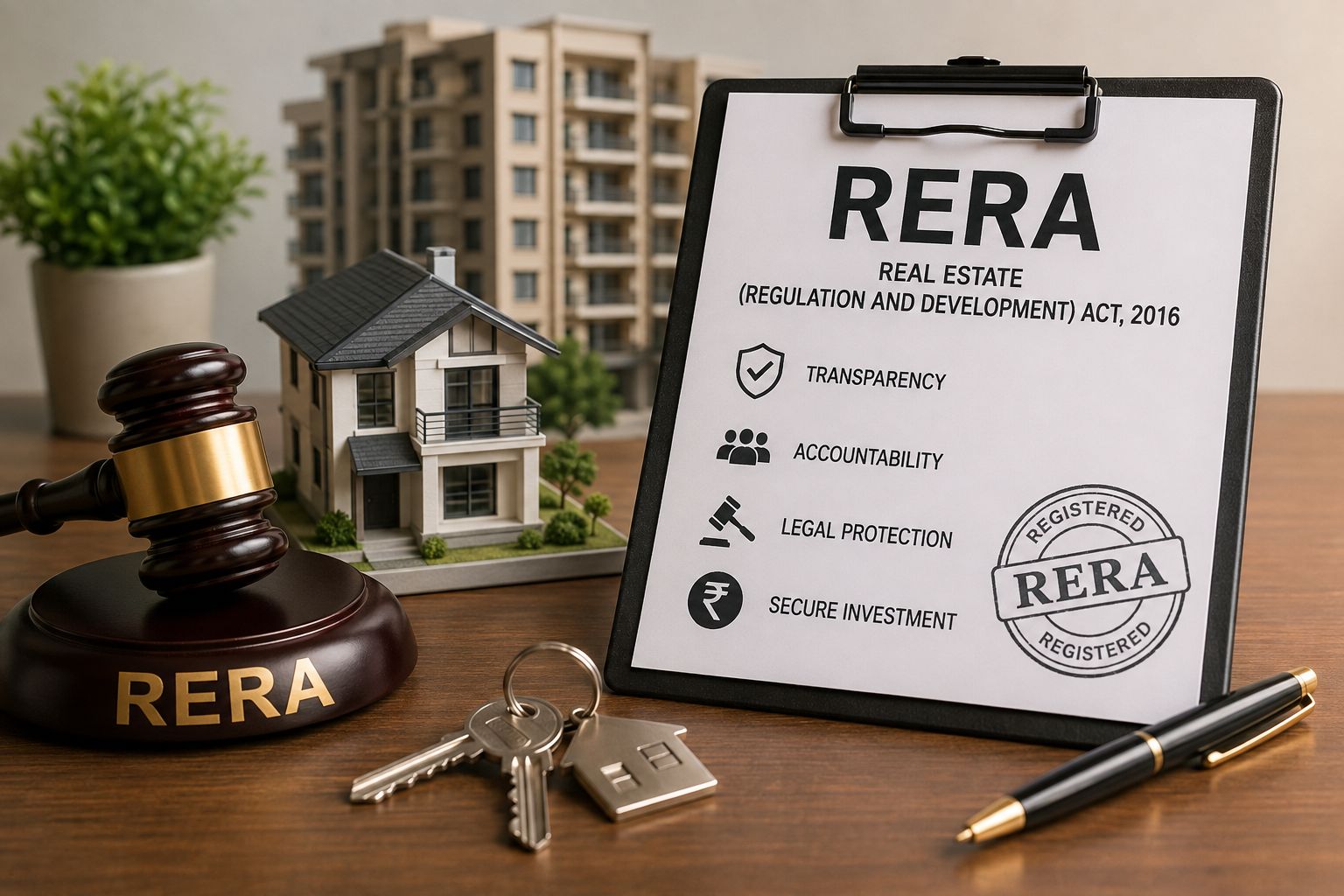
RERA stands for the Real Estate (Regulation and Development) Act, 2016 – a law passed by the Indian government to make the real estate sector transparent and accountable.
RERA provides very little protection to homebuyers. Builders could:
You can promote a project without ownership of land or land clearance
Once you have the bookings, you can change the layout or amenities
Delay possession for years without penalty
Use money raised for one project to fund another
RERA was brought in to sort out exactly these problems. Every state in India has its own RERA authority – TS-RERA (Telangana), MahaRERA (Maharashtra), K-RERA (Karnataka) – which implements the act locally and has a public database of registered projects.
Why RERA Was Needed
Real estate was one of the least regulated big industries in India. This was changed by RERA which made it mandatory to register projects and compelled builders to give accurate information and gave buyers a legal body to approach if promises are not kept.